
Strategic management is the ongoing process by which organizations set direction, allocate resources, and align capabilities to achieve long‑term objectives. In practice, strategic work is rarely a set of tidy, sequential steps. Mission statements blend with objectives; policies support strategy while also constraining it; and internal capabilities both shape and are shaped by strategic choices. Still, it’s useful to identify core components of strategic management so leaders can approach strategy deliberately and coherently. Below I improve and expand the original draft, clarifying concepts, tightening language, and adding practical guidance for each element.
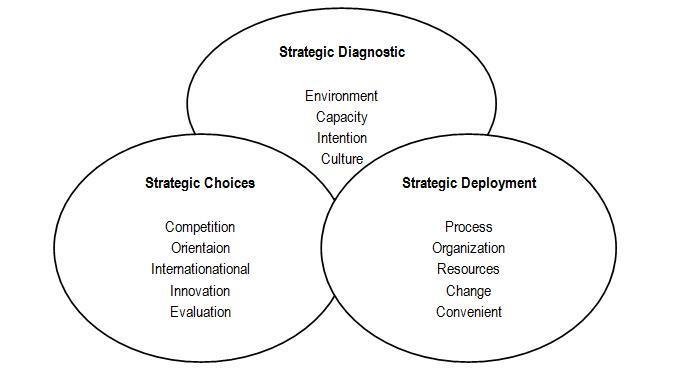
Overview of Core Strategic Management Components
At a high level, strategic management comprises the following interrelated components:
- Mission: the organization’s fundamental purpose and identity.
- Vision and values: what the organization aspires to become and the principles that guide behavior.
- Goals and objectives: the desired outcomes that translate purpose into measurable targets.
- External and internal analysis (profile): an evidence base describing market context and organizational capabilities.
- Strategy: the chosen approach to achieve objectives given the internal and external realities.
- Policies and tactics: guardrails and short‑term actions that implement and sustain strategy.
- Monitoring and adaptation: systems and processes to measure performance and adjust course.
Each component overlaps with others; strategic work is iterative. Below I explain each element, why it matters, and how to make it useful in day‑to‑day management.
Mission: Purpose That Guides Choice
What it is
The mission is a concise statement of why the organization exists — the core purpose that distinguishes it from peers and clarifies the scope of its activities in product, service, customer, and geographic terms.
Why it matters
A clear mission aligns stakeholders around priorities, helps rule out irrelevant initiatives, and provides continuity during change.
Characteristics of an effective mission
- Clear and concise: easy to understand and remember.
- Distinctive: differentiates the organization from competitors.
- Actionable: implies areas for investment and areas to avoid.
- Enduring yet adaptable: stable enough to provide continuity but broad enough to remain relevant as conditions evolve.
Common pitfalls
- Using the mission as PR copy rather than a management tool.
- Being either too vague (meaningless) or too narrow (constraining future options).
- Not embedding the mission into decision processes.
Practical tip
Test your mission by asking: Would this statement help a frontline manager choose between competing projects? If not, refine it.
Vision and Values: The Destination and the Way There
What they are
Vision describes a future aspiration — where the organization wants to get. Values express the core beliefs and norms that guide behavior and decisions.
Why they matter
Vision motivates and rallies people; values shape culture and inform acceptable tradeoffs during strategy execution.
Practical tip
Make the vision inspirational but concrete enough to guide long‑term choices. Translate values into expected behaviors and incorporate them into hiring, performance management, and decision frameworks.
Goals and Objectives: Translating Purpose into Measurable Outcomes
What they are
Goals are broad desired outcomes (e.g., become the market leader in X). Objectives are specific, measurable targets (e.g., increase market share from 12% to 20% within 36 months).
Why they matter
Well‑crafted goals and objectives focus resources, enable performance measurement, and create accountability.
Best practices
- Use SMART criteria where appropriate: Specific, Measurable, Achievable, Relevant, Time‑bound.
- Cascade objectives down through the organization so departmental targets align with the corporate strategy.
- Distinguish outcome objectives (results) from input/process objectives (activities and capabilities).
Practical tip
Limit the number of top‑level objectives to a few critical priorities to preserve focus and avoid resource dilution.
Profile (Internal Analysis): Know Your Capabilities
What it is
The company profile is the result of internal analysis — an evidence‑based view of strengths, weaknesses, resources, processes, and cultural attributes that determine what the organization can realistically do.
Why it matters
Strategy must be grounded in capabilities; ambitious objectives without matching capabilities invite costly failures.
Key areas to assess
- Financial resources and constraints.
- Human capital: skills, leadership depth, and organizational culture.
- Physical and technological assets.
- Processes, governance, and data capabilities.
- Historical performance and track record of execution.
Tools and approaches
- SWOT (Strengths, Weaknesses, Opportunities, Threats) to connect internal and external realities.
- VRIO (Value, Rarity, Imitability, Organization) to evaluate sustaining competitive advantages.
- Capability mapping to identify gaps and priorities for investment.
Practical tip
Treat the profile as dynamic — update it regularly and use it to prioritize capability investments tied directly to strategic objectives.
External Analysis: Understand the Competitive Context
What it is
External analysis maps the market landscape, industry structure, customer needs, technological trends, regulatory environment, and competitor moves.
Why it matters
A strategy that ignores external forces risks irrelevance or surprise. Understanding the environment helps identify opportunities and threats.
Common frameworks
- PESTEL (Political, Economic, Social, Technological, Environmental, Legal).
- Porter’s Five Forces to assess industry attractiveness.
- Customer segmentation and value‑chain analysis.
Practical tip
Combine quantitative market research with qualitative insights from customers, frontline employees, and partners to build a multidimensional picture.
Strategy: The Chosen Path to Achieve Objectives
What it is
Strategy is the set of deliberately chosen actions and priorities that leverage the organization’s strengths to capture opportunities and mitigate risks, thereby achieving objectives.
Why it matters
Strategy provides coherence: it ties mission, capabilities, and the external environment into a clear direction for allocation of resources.
Types of strategic choices
- Where to compete (markets, segments, geographies).
- How to compete (cost leadership, differentiation, specialization).
- What capabilities to build or buy (technology, partnerships, skills).
- The pace and scale of initiatives (incremental vs. transformational).
Formulating strategy
- Generate strategic options informed by analysis.
- Evaluate options against mission, capabilities, financial implications, and risk appetite.
- Select a coherent set of choices that align with priorities and resources.
Practical tip
Choose a limited number of strategic bets and align resources around them rather than scattering efforts across many weak initiatives.
Policies and Tactics: Implementing and Sustaining Strategy
What they are
Policies are formalized rules and boundaries that guide decisions (e.g., risk tolerances, investment criteria). Tactics are the specific, short‑term actions and projects that operationalize strategy.
Why they matter
Policies create consistency and guardrails; tactics convert strategy into executable plans.
Practical tip
Ensure policies are enabling rather than bureaucratic. Link tactics to objectives through project charters, timelines, budgets, and clear ownership.
Monitoring, Measurement, and Adaptation
What it is
Performance management systems track progress, reveal problems early, and provide evidence for course corrections.
Why it matters
Strategy is not a one‑off event — it requires disciplined review and willingness to adapt when assumptions change.
Key elements
- A set of leading and lagging indicators tied to objectives.
- Regular governance (e.g., quarterly strategy reviews) with decision protocols for reallocating resources.
- Mechanisms to capture learning and update assumptions (scenario planning, war‑gaming).
Practical tip
Use a small balanced scorecard of metrics that reflect financials, customers, operations, and capabilities. Complement metrics with structured reviews that examine assumptions, not just results.
Interplay and Iteration: How the Components Fit Together
These components are interdependent:
- A mission sets boundaries that inform strategic choices and policies.
- Analysis (internal and external) grounds strategy in reality.
- Strategy determines which capabilities must be strengthened, which become priorities for investment, and which policies should be established.
- Goals and objectives translate strategy into measurable targets; tactics and policies deliver them.
- Monitoring closes the loop by revealing when to stay the course or adapt.
Practical governance model
- Strategic intent (mission/vision/values) is set by leadership.
- Annual strategic planning translates intent into priorities and resource allocations.
- Quarterly reviews monitor execution, validate assumptions, and authorize adjustments.
- Continuous horizon scanning updates external analysis and influences the next planning cycle.
Common challenges and how to address them
- Siloed thinking: Encourage cross‑functional strategy teams and shared objectives to prevent fragmented initiatives.
- Analysis paralysis: Use hypothesis‑driven workstreams and short experiments to validate ideas rapidly.
- Cultural resistance: Embed values into everyday processes and use early wins to build momentum.
- Misaligned incentives: Tie compensation and recognition to strategic priorities and long‑term outcomes.
Conclusion
Strategic management is both an art and a disciplined process. Clear mission and vision provide direction; rigorous analysis defines where opportunities and constraints lie; well‑chosen strategy aligns resources and capabilities; policies and tactics convert strategy into action; and robust monitoring keeps the organization adaptive and accountable. Rather than treating these components as isolated boxes to tick, effective leaders use them as an integrated toolkit — iterating between purpose, evidence, choice, and execution to create sustainable value.
Discover more from Decroly Education Centre - DEDUC
Subscribe to get the latest posts sent to your email.