
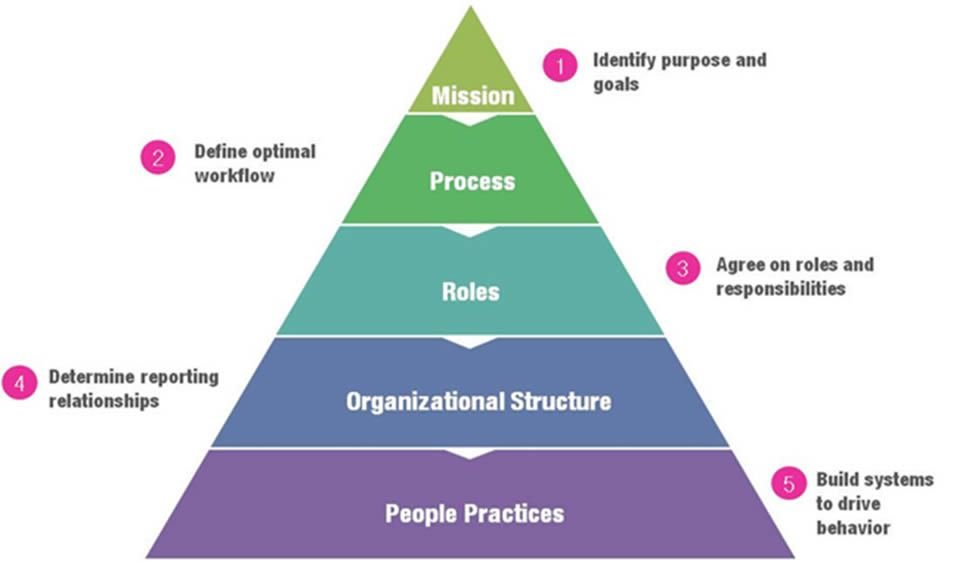
Organisation is built around the structure, technological inputs, the processes and the people. In a sense, the structure of the organisation has influence on the designs of both work and jobs. Organisational structures essentially depicts the structure of interactions, communications as well as the ,mode of operation and the processes put in place to achieve the purpose for which the ,business is set up.
MEANING OF ORGANISATION
Structure is about the patterns of relationship among positions and in the organisation and members of the organisation. Structure is clearly important in the sense that it makes possible the application of the process of management and creates a framework for orderly interaction and command through which the activities of the organisation can be planned, organised, directed, and coordinated for easy managerial decisions and controls. Whether small or large, every organisation needs a structure which, not cast in iron, can be constantly reviewed to keep with growth and development pace. Organisational structure according to Mullins (2007) can help achieve the following objectives:
Social satisfaction: Foster a positive work environment that supports the well-being and satisfaction of all members.
Economic and efficient performance: Enhance overall effectiveness by optimizing resource utilization and ensuring cost-efficient operations.
Activity monitoring: Establish robust systems to track and evaluate organisational activities for continuous improvement.
Accountability: Promote responsibility for work undertaken by both groups and individual members, ensuring transparency and ownership.
Co-ordination: Strengthen collaboration across different departments and areas of work to achieve unified goals.
Flexibility: Build adaptability to respond to future demands, developments, and changing environmental influences.
ORGANISATIONAL DESIGN
The architecture of work is built around structure, organisational processes, available technology and the
cadres of people meant to engage in various activities. Organisational designs start with the business idea for which the entrepreneur seeks to actualize in reality by bringing together man, materials, machines and money to achieve his/her objectives. Designs of organisations vary essentially along these
dimensions considering the size, activities, context and the managerial experiences that gave birth to the design. In designing organisations, what work for A may not work for B. There are two generic models of organisation designs; the mechanistic and organic designs.
Mechanistic designs
Mechanistic designs are built on Weberian bureaucratic prescriptions of rigidity and tightly controlled
structure. This type of structure is characterized by a high degree of specialization, rigid departmentalization, narrow spans of control, formalization of rules, authority and communication processes. The organisation is viewed as an objective entity in which precision of rules, decision, reward
and sanction is highly valued.
Little is left to discretion of managers and low-level employees are not involved in any form of decision making. This type of designs placed premium on efficiency, rules, regulations, standardized tasks
and performance yardsticks. Human traits and characteristics like personality, diversity, judgments and ambiguities are hardly considered. The main advantage of mechanistic structures are predictability and stability while it has been criticised as slow, insensitive to human needs and less adaptive to change.
Organic designs
Organic designs on the other hand are a direct contrast to mechanistic designs. This type of
organisation is highly adaptive and flexible and built of high consideration for human strengths and weaknesses. The core idea is meaningful jobs that promise satisfaction and quality of work life through minimal control and strict rules. The employee is empowered through training and developmental
programmes to make decisions, solve problems and be creative. Since adaptive, organic organisations respond to changes, are flexible and tend to be more effective in the long run. Individual discretion may lead to unpredictability, increased costs of errors.
WORK DESIGN

Initial Activities of the Entrepreneur in Workspace Design
The entrepreneur’s first responsibility is to design a workspace that accommodates equipment, technology, and people, ensuring sufficient room for tasks, duties, repairs, and processes to flow smoothly. Effective workspace design considers the following key elements:
People Once the structure is established, the next step is fitting people into jobs through effective job design. This ensures that roles are aligned with organisational needs and individual capabilities.
Environment Attention is given to the arrangement and installation of machines, equipment, offices, corridors, and stairways. These must be safe, clean, and user-friendly to promote efficiency and comfort.
Machines and Equipment The installation of machines and equipment should align with ergonomic principles to fit human attributes. This requires collaboration among engineering psychologists, engineers, architects, and other experts who contribute to design, planning, supervision, execution, and future maintenance.
Structure Organisational structure defines how people interact, communicate, and coordinate to achieve goals. The type of work dictates structural options—whether tall, flat, or team-based—and guides decisions about which operations (e.g., production, marketing, personnel) should be established as departments or units.
JOB DESIGN
After the structural layout of work demarcating departments, units, teams, etc, the jobs are next to be designed. Jobs consist of titles, tasks, duties, responsibilities, conditions, hazards/risks and the social context (which later comes out as organisational culture and climate). Job designs entail putting these elements together for the job incumbent to be able to meet the goals and objectives entailed in the job position.
ORGANISATIONAL STRUCTURE
Organisational structure is about what kind of work architecture/design to be put in place. It is basically
about formal arranging and structuring work to accomplish organizational goals. There are several design options that will produce different structures of division of work, assignment of responsibilities, and coordination of clusters of jobs, establishment of lines of authority and bringing equipment/technology and people together to form departments, team or groups for the allocation and use of resources to produce goods and services.
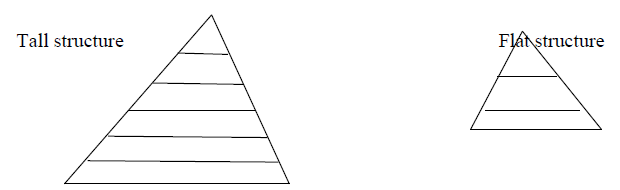
Organisational structure can be tall or flat in the way departments are grouped; whether functionally, in
consideration of geography, product, processes or customers. Tall structures have long span of control, many layers/job cadres and communication and authority flows from top downward. Organisational structure can be formal, informal or non formal.
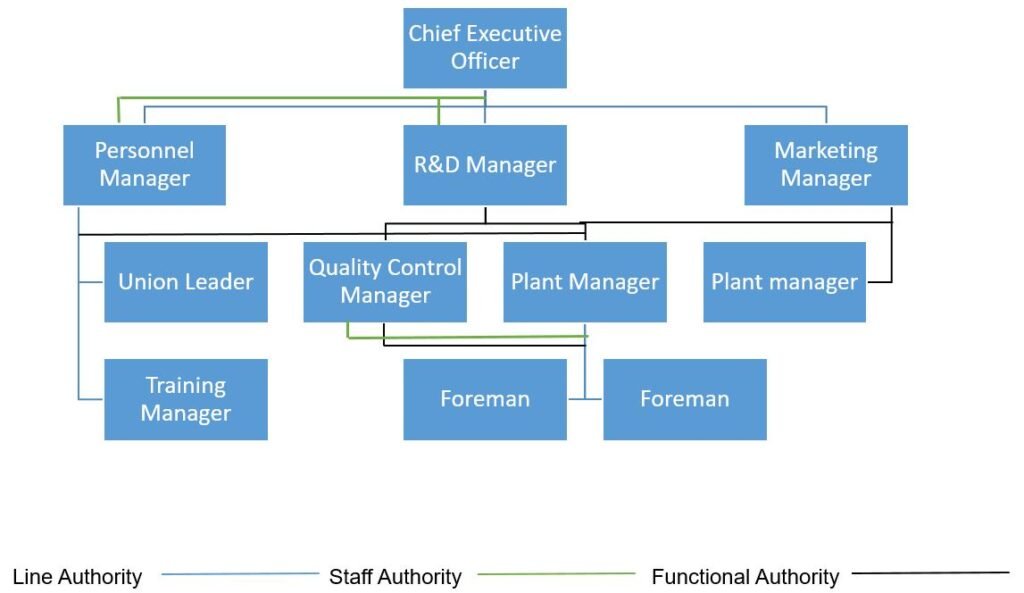
Why formal organisation embodies the explicit and formally stated set of rules and regulations that define the activities of the members. The mechanisms of a formal structure includes the charts, rules, chains of commands, spans of control that are essentially in written form. The structure is often arranged hierarchical order of order of authority on top of which is the Board of Directors, management, middle management, lower-level management and the rank and file.
CONSIDERATIONS IN WORK DESIGN
Some of the factors to put into consideration in designing the work are:
- Organisational philosophy, policies, and objectives Align work design with the guiding principles, strategic goals, and long-term vision of the organisation.
- Integration of structure, technology, and people Ensure effective interaction among organisational structure, machines, equipment, technology, and human resources.
- Authority and communication flow Establish clear chains of command, authority distribution, and communication pathways to support coordination and decision-making.
- Efficiency, safety, and health Prioritise cost-effectiveness while safeguarding the safety and well-being of workers.
- Centralisation versus decentralisation Determine the appropriate balance between centralised control and employee empowerment to optimise work processes.
- Formalisation and flexibility Define the level of standardisation required while maintaining adaptability to respond to change and innovation.
- Employee satisfaction and commitment Design jobs that foster satisfaction, engagement, and organisational citizenship behaviour through responsive and supportive work practices.
Conclusion
Organisational structure is important architect for arranging and structuring work to allow
for smooth control, hierarchy and order. If attention is paid to how structure and processes determines behaviour, culture and job satisfaction, crafting the organisational structure and designing work and jobs have to be done with care and concern for the fulfilment of organizational goals.
Discover more from Decroly Education Centre - DEDUC
Subscribe to get the latest posts sent to your email.