
African traditional religions encompass a vast array of beliefs, practices, and ritual forms shaped by centuries of cultural interaction, ecology, political life, and cosmological reflection. Central to many of these religious systems is the practice of sacrifice and offering, a multifaceted set of acts through which human beings engage the sacred, sustain social and cosmic balance, and negotiate relationships with divine beings, ancestors, and the community of living persons. Sacrifice in African contexts cannot be reduced to a single form or meaning; rather, it functions within a complex system of symbolism and pragmatics, addressing thanksgiving, negotiation, purification, inauguration, prevention, and ordinary sustenance.
This article examines categories of sacrifices found among African peoples, with attention to how they articulate human–divine and human–ancestral relations, and explicates the social, moral, and cosmological significance of each category. The discussion draws on generalisations that are widely attested across sub-Saharan societies (including examples familiar from Zambian and neighbouring cultural areas), while acknowledging the significant local variation in rites, terminology, and theological emphasis.
Religious Context and Functions of Sacrifice
To understand sacrificial categories it is necessary first to situate them in the broader religious world of many African societies. God (or the supreme being) is commonly conceived as the ultimate source of life, fertility, and moral order; yet the divine is frequently mediated through spirits, divinities attached to particular places or forces, and the living-dead (ancestors). These intermediaries link human communities to the transcendent and serve as custodians of lineage, land, and social norms.
Sacrifice and offering function as communicative acts within this cosmological framework: they express dependence, gratitude, supplication, remorse, and reaffirmation of social bonds. Sacrifices often combine symbolic elements—food, blood, smoke, and libations, with performative elements—prayer, song, dance, and feasting—so that ritual efficacy is realised through a communal, embodied practice.
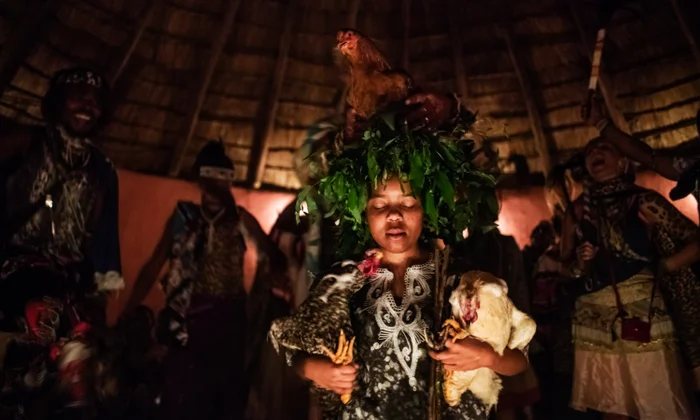
Categories of Sacrifices
Thanks Offering
The thanks offering, often termed a thanksgiving or gratitude sacrifice, expresses appreciation for blessings that are perceived as the beneficent interventions of the divine or ancestors. Such offerings follow concrete events—bumper harvests, recovery from illness, success in hunting, or victory in conflict—and conduce to communal rejoicing. Gratitude sacrifices typically involve the presentation of portions of the bounty (grain, meat, palm produce) to a shrine or altar, accompanied by libation, prayer, and communal feasting.
The logic of the thanks offering is reciprocal: humans acknowledge a benefaction and, by sharing the meal with the deity or ancestor, reinforce ongoing mutual obligations. This ritual share—whereby the sacred recipient is thought to “consume” the offering spiritually while the people partake physically—reaffirms the benefactor’s continued favor and strengthens the social bond between worshippers and their protectors.
Votive Offering
Votive offerings are pledges made in the course of supplication: the supplicant promises to make a specific offering if a petition is granted. The Votive practice is contract-like in structure; it presupposes a deliberative relationship in which the divinity may grant a favor in return for a future performance. These offerings often accompany life-cycle events, dangerous undertakings, or requests for personal or familial welfare—successful childbirth, healing, safe travel, or good fortune in commerce.
When granted, the fulfilment of a votive promise commonly entails a conspicuous public rite, including sacrificial slaughter, music, dance, and communal feasting, thereby also marking the moral integrity of the petitioner who honors their vow. The votive thus serves both as a mechanism for securing divine intervention and as a means of socially validating gratitude and trustworthiness within the community.
Expiation (Atonement) Offering
Expiatory sacrifices address instances of pollution, misfortune, moral breaches, or unexplained calamity. When crop failure, prolonged illness, sudden death, epidemics, or famine afflict a community, expiation rites are performed to repair the rupture between humans and the sacred order. Such offerings are framed by notions of defilement, guilt, or broken covenant; the community or individual undergoes rites of abasement, confession, and symbolic cleansing.
The sacrificial act—whether the slaughter of an animal, the pouring of libation, or ritual acts of washing and dressing—serves to remove or transfer culpability and to restore the sufferer to a state of purity. Importantly, expiation reasserts moral norms: it acknowledges that misfortune can have social or spiritual causes, that the community shares responsibility for redress, and that the restoration of harmony requires ritual action as much as moral reformation.
Foundation (Inaugural) Sacrifices
Foundation sacrifices inaugurate new enterprises, structures, settlements, or undertakings. Before establishing a building, opening a business, planting a field, or founding a community institution, peoples often make offerings to solicit the protection, blessing, and productive power of the divine. Such rites are embedded in a worldview that regards new beginnings as vulnerable moments requiring sacral endorsement. The foundation sacrifice ritually consecrates the venture, invokes the favor of spirits or ancestors, and thereby increases the likelihood of success. Administratively and socially, these rites signal communal recognition of the new activity and integrate it into existing moral and cosmological networks.
Preventive Sacrifice
Preventive, or prophylactic, sacrifices are performed to avert impending danger or to ward off misfortune before it occurs. These offerings are anticipatory and often undertaken when omens, divinatory pronouncements, or environmental signs suggest possible harm. The aim is pre-emptive protection: the ritual substitutes the sacrificial object or victim for a threatened person, thereby absorbing or deflecting malevolent forces. Preventive rites can be highly dramatic, involving the symbolic replacement of the threatened individual with an item or animal that is ritually destroyed, buried, or otherwise treated as a substitute corpse. In many societies, precautionary sacrifices are routine at seasonal transitions, during outbreaks of pestilence, or when political instability threatens communal well‑being.
Meal and Drink Offerings (Libation and Daily Provisions)
Not all sacrifices are extraordinary; many are routine, daily or regular acts that maintain ongoing relations with the sacred. Meal and drink offerings, presenting portions of family meals at the hearth, pouring libations of water, beer, or wine, are quotidian practices that sustain a continuous exchange between the domestic sphere and the spiritual realm.
Libation is especially significant: pouring liquid while invoking named ancestors or deities enacts remembrance, solicits attention, and keeps channels of communication open. Such ordinary offerings reaffirm the presence of the sacred in daily life and integrate religious obligations into the patterns of subsistence and sociability. While liturgically modest, these acts have profound ethical and cosmological import: they embody gratitude, invoke protection, and constantly renew the relationships through which social life is sustained.
Ritual Elements and Social Dimensions
Across these categories, several ritual elements recur. Sacrificial slaughter or the presentation of food as an offering are accompanied by speech acts—prayers, invocations, and petitions—that articulate intent and request precise outcomes. Music, dance, and protracted feasting transform sacrifice into a communal performance, enacting the social bonds that religious practice both expresses and reproduces. Sacred specialists—priests, diviners, elders, or ritual custodians—often mediate the performance, ensuring that prescriptions for time, place, and manner are observed; they interpret signs and determine the appropriate category of sacrifice in light of social need or cosmological diagnosis.
Sacrifice also reinforces social hierarchies and networks. Public offerings mark status, consolidate alliances, and legitimate leadership. They publicly demonstrate a person’s capacity to mobilize resources for ritual expenditure, thereby integrating economic capability with moral and spiritual authority. At the same time, communal partaking of sacrificial meals fosters solidarity, redistributes ritual wealth, and mitigates social tensions that might otherwise result from individualized acts of assertion.
Symbolic Meaning and Theological Implications
Theologically, sacrifices express a set of beliefs about reciprocity, mediation, and the porous boundary between material and spiritual worlds. The idea that the living can feed, placate, or enlist the favor of unseen beings presupposes a cosmos of mutual dependency. The presence of intermediaries—ancestors and spirits—highlights continuity between generations and the moral oversight that lineage and place exercise over present conduct. Thus, sacrifice is not merely transaction; it is a moral pedagogy that inculcates reciprocal responsibility, fosters communal memory, and integrates individual fortunes into a larger narrative of kinship and land.
Moreover, sacrificial categories articulate differing conceptions of causality. While votive and thanksgiving offerings reflect a theology of response and reward, expiatory and preventive rites reflect a worldview in which misfortune can have moral or supernatural causes and where ritual action can redirect or nullify those causes. Foundation sacrifices express confidence in divine sanction as a necessary condition for sustainable human endeavors. These conceptual distinctions structure ritual choices and provide a semi-theological taxonomy by which communities diagnose and address human affairs.
Continuity and Change
While these categories are widely recognizable, it is important to acknowledge change. Colonial displacement, Christian and Islamic conversions, urbanization, and economic transformation have altered sacrificial practices in many regions. Some rites have been reconfigured, their meanings reframed, or their public visibility reduced. Yet sacrificial logic often persists in adapted forms—through symbolic acts, church-incorporated liturgies, or private domestic observances—attesting to the resilience of ritual frameworks that address fundamental human concerns: gratitude, need, purity, protection, and beginnings.
Conclusion
Sacrifice in African traditional religions is multiple in form and rich in meaning. The categories—thanks offerings, votive offerings, expiation offerings, foundation sacrifices, preventive sacrifices, and daily meal and libation offerings—constitute a coherent system through which communities maintain relations with the divine, regulate moral order, and secure social cohesion. Through ritual speech, food, blood, and the sharing of feasts, human beings situate themselves within a cosmos that demands reciprocal attentiveness. Studying these categories illuminates how religious practice mediates ecological, social, and moral life, and how ritual responses are tailored to the contingencies of human existence. In doing so, it reveals the profound ways in which spiritual imagination and social action are entwined across African societies.
Discover more from Decroly Education Centre - DEDUC
Subscribe to get the latest posts sent to your email.