
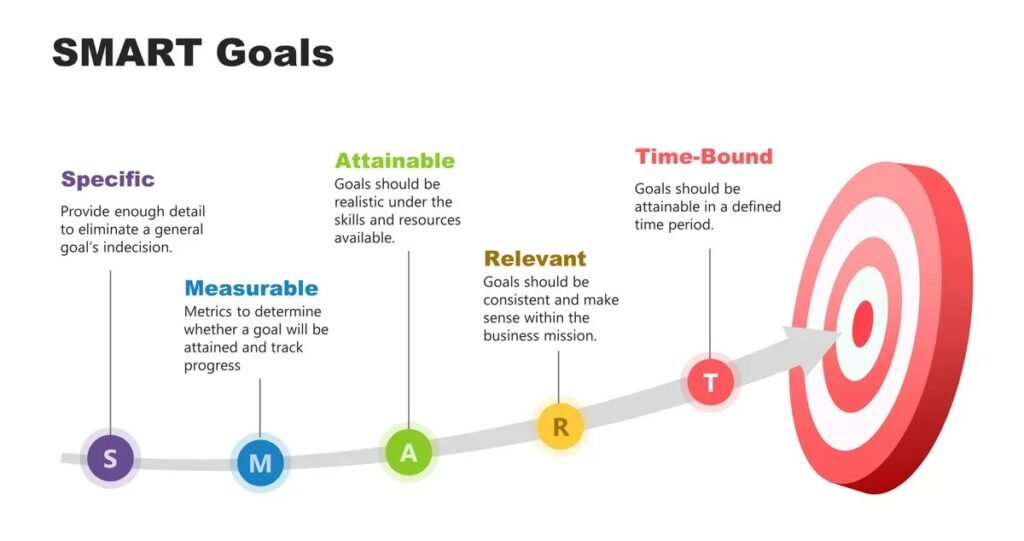
In an increasingly complex and competitive business environment, the capacity to define clear, actionable objectives is a critical determinant of organizational performance. Objectives transform strategic intentions into measurable outcomes, align resources and effort, and create accountability across functional teams. However, objectives that are vague, unrealistic, or poorly timed can waste resources and obscure priorities. The SMART framework — an acronym for Specific, Measurable, Achievable (or Attainable), Relevant (or Realistic), and Time-bound — offers a robust, widely adopted methodology for constructing objectives that are both strategic and operationally useful. This article examines the rationale behind SMART objectives, explores each component in detail, discusses practical considerations and common pitfalls, and provides guidance for integrating SMART objectives into performance management and strategic planning processes.
Why SMART Objectives Matter
Objectives are the bridge between strategy and execution. They provide clarity on what success looks like and enable organizations to monitor progress, evaluate outcomes, and recalibrate tactics as needed. SMART objectives matter for several reasons:
- Alignment and focus: Well-defined objectives orient teams around shared priorities and reduce ambiguity about what should be accomplished.
- Measurable progress: Clearly measurable objectives enable data-driven decision-making and timely corrective action.
- Motivation and accountability: Defining concrete targets helps individuals and teams understand expectations and fosters ownership of results.
- Resource optimization: Specific objectives guide the allocation of financial, human, and technological resources to where they will have the most impact.
- Risk mitigation: Time-bound goals with measurable criteria reduce the risk of scope creep and mission drift.
Despite these advantages, many organizations struggle to write effective objectives. Objectives are often broad, aspirational statements that lack operational detail or quantifiable metrics. Applying the SMART framework helps transform such statements into effective performance levers.
The SMART Framework Explained
Specific
Meaning:
A specific objective defines exactly what is to be achieved, who is responsible, and any relevant constraints or context. Specificity eliminates ambiguity and directs effort toward a clearly articulated outcome.
Guidelines:
- Use direct, active language that names the deliverable or change expected.
- Identify the stakeholder, team, or individual responsible for delivery.
- Clarify scope: which products, markets, customer segments, or geographies the objective pertains to.
- Note underlying assumptions or dependencies where relevant.
Example (weak): “Improve customer satisfaction.”
Example (specific): “Increase the Net Promoter Score (NPS) for our North American small-business segment by improving post-sale support responsiveness.”
Measurable
Meaning:
A measurable objective includes quantifiable criteria that allow progress to be tracked and results to be evaluated. Measurement creates an evidence base for decision-making and performance reviews.
Guidelines:
- Select metrics that accurately represent the intended outcome (e.g., KPI, percentage, absolute number).
- Define baseline values and the method and frequency of measurement.
- Ensure data sources are reliable and, ideally, automated to reduce reporting burden.
- Consider both leading indicators (predictive) and lagging indicators (outcome-based).
Example (weak): “Increase sales.”
Example (measurable): “Increase quarterly online sales revenue from $4.2M to $5.0M, measured via the e-commerce platform’s revenue dashboard.”
Achievable (or Attainable)
Meaning:
An achievable objective is realistic given the organization’s capabilities, capacity, and environment. It should be challenging enough to motivate improvement but not so out of reach that it becomes demoralizing.
Guidelines:
- Base targets on historical performance, market conditions, and resource constraints.
- Factor in technical and operational feasibility, regulatory considerations, and talent availability.
- Engage those responsible in setting the target to ensure buy-in and realistic commitments.
- When stretching objectives, provide a rationale and outline support mechanisms (e.g., additional budget, training).
Example (weak): “Double revenue next quarter with no change in budget.”
Example (achievable): “Grow monthly recurring revenue by 12% over six months through targeted upsell campaigns and a one-off promotional offer, supported by a $75,000 marketing budget.”
Relevant (or Realistic)
Meaning:
A relevant objective aligns with broader business strategy and priorities. It should contribute meaningfully to organizational goals rather than divert effort to low-impact activities.
Guidelines:
- Tie objectives to strategic goals (e.g., market expansion, margin improvement, customer retention).
- Evaluate opportunity cost: confirm the objective is the best use of scarce resources.
- Consider stakeholder needs and external conditions to ensure continued relevance over time.
- For cross-functional objectives, verify that coordination mechanisms exist.
Example (weak): “Reduce call center queue times by 10%” (without business context).
Example (relevant): “Reduce call center queue times by 10% to support a broader initiative to improve customer retention among high-value accounts.”
Time-bound
Meaning:
A time-bound objective specifies a clear timeframe or deadline for achievement. This creates urgency, sequences work, and enables interim checkpoints.
Guidelines:
- State specific deadlines (e.g., dates, quarters) rather than vague periods.
- Establish milestones and review points for long-term objectives.
- Align timelines with budgeting cycles, product roadmaps, and market opportunities.
- For objectives contingent on external events, incorporate contingency plans and triggers.
Example (weak): “Improve product quality.”
Example (time-bound): “Decrease product defect rate from 2.5% to 1.0% within 12 months, with quarterly quality reviews.”
Applying SMART in Different Business Contexts
Marketing and Sales:
- Objective: “Increase qualified lead generation by 30% in Q3 compared to Q2 by launching a targeted content campaign to SMBs in the healthcare sector and optimizing landing pages, measured via the CRM lead scoring system.”
Operations and Supply Chain:
- Objective: “Reduce end-to-end order fulfillment cycle time from 6 days to 3.5 days within nine months by implementing warehouse process automation and consolidating suppliers, measured using ERP order timestamps.”
Product Development:
- Objective: “Reduce time-to-market for new feature releases from an average of 14 weeks to 9 weeks over the next two product cycles by adopting a continuous integration/continuous delivery pipeline and cross-functional sprint teams.”
Human Resources:
- Objective: “Improve employee engagement score from 68 to 75 by the annual survey through a leadership development program and enhanced internal communication, tracked through pulse surveys every quarter.”
Finance:
- Objective: “Improve operating margin by 150 basis points over the next 12 months through a structured cost rationalization program focused on non-strategic vendor spend and process optimization.”
Common Pitfalls and How to Avoid Them
Pitfall: Vague language
- Solution: Replace general verbs with precise outcomes and name responsible parties.
Pitfall: Choosing the wrong metrics
- Solution: Validate that chosen metrics drive the desired behavior and are not easily gamed. Use a balanced set of indicators (quality, speed, cost, satisfaction).
Pitfall: Unattainable targets
- Solution: Use historical data, market analysis, and scenario planning. Engage operational leads early when calibrating stretch goals.
Pitfall: Overemphasis on short-term targets
- Solution: Balance short-term operational objectives with longer-term strategic milestones. Use cascading objectives that connect quarterly targets to multi-year strategy.
Pitfall: Failure to update objectives
- Solution: Schedule regular reviews and be willing to revise objectives when major internal or external changes occur. Maintain governance to approve changes.
Integrating SMART Objectives into Organizational Processes
Strategy Cascade and Alignment:
- Start at the top with strategic priorities, translate these into departmental goals, and then cascade into team and individual SMART objectives. Ensure each level links to the higher-level intent via measurable contribution.
Goal-Setting Cycle:
- Adopt an annual planning horizon for strategic objectives, with quarterly or monthly operational targets. Use mid-cycle reviews to reassess priorities and adjust targets where justified.
Performance Management:
- Incorporate SMART objectives into performance appraisals, compensation frameworks, and development plans. Distinguish between stretch goals for development and baseline targets for performance evaluation.
Project and Program Management:
- Use SMART objectives to define the scope and success criteria of projects. Ensure project charters specify measurable deliverables, timelines, and resource commitments.
Tools and Data Infrastructure:
- Invest in reliable data systems (CRM, ERP, analytics) to support measurement. Standardize metrics and definitions to avoid inconsistencies across teams.
Governance and Accountability:
- Establish clear ownership for each objective and define escalation paths for risks. Use regular cadence meetings (e.g., weekly stand-ups, monthly performance reviews) to monitor progress.
Case Study Example (Illustrative)
Company background:
A mid-sized B2B software company seeks to improve customer retention and reduce churn, which has risen to 12% annually. The strategic priority is to stabilize recurring revenue while expanding into adjacent market segments.
SMART Objective:
“Reduce annual voluntary churn for enterprise customers from 12% to 8% within 12 months by strengthening post-sale customer success engagement, implementing a quarterly account health scoring system, and launching a targeted renewal incentive for at-risk accounts, measured via the subscription management system.”
Analysis:
- Specific: Targets enterprise customers and defines initiatives (customer success, health scoring, renewal incentive).
- Measurable: Specifies churn reduction from 12% to 8% and uses subscription management data.
- Achievable: Based on analysis of churn drivers and investment in customer success headcount and tools.
- Relevant: Directly connected to strategic priority of stabilizing recurring revenue.
- Time-bound: 12-month horizon with a clear baseline and target.
Implementation steps and governance would include hiring/allocating two senior customer success managers, developing the quarterly health scoring algorithm, and defining the incentive thresholds and approval process.
Measuring and Reporting Progress
Effective reporting balances transparency with actionability. Suggested practices:
- Dashboarding: Maintain a concise dashboard with primary SMART objective KPIs, trends, and variance against target.
- Leading indicators: Include leading metrics that predict success (e.g., product usage frequency, NPS trends) alongside lagging outcomes.
- Regular review cadence: Weekly operational checks, monthly management reviews, and quarterly executive reviews.
- Root cause analysis: For missed targets, use structured problem-solving (e.g., 5 Whys, fishbone diagrams) to identify corrective actions.
- Documentation: Capture decisions, assumptions, and changes to objectives to preserve institutional learning.
Adapting SMART for Complex or Ambiguous Situations
In highly uncertain or innovation-focused contexts, traditional SMART objectives can feel constraining. Consider adaptations:
- Use hypothesis-driven objectives: Define measurable experiments (e.g., “Test three pricing models with a sample of 200 customers over 90 days to determine willingness-to-pay, using conversion rate as the primary metric”).
- Define milestones and learning goals: For early-stage initiatives, emphasize learning outcomes (validated assumptions, prototypes tested) as measurable targets.
- Combine OKRs and SMART: Objectives and Key Results (OKRs) can provide aspirational direction while SMART criteria can define the key results with precision and accountability.
Conclusion
SMART objectives are a practical and effective method for translating strategy into measurable action. When applied thoughtfully, they enhance focus, enable accountability, and support data-driven management. The true value of SMART objectives lies not only in their construction but also in the discipline of measurement, governance, and continuous improvement that surrounds them. Organizations that cultivate the skill of writing clear, achievable, and strategically aligned objectives are better positioned to allocate resources wisely, respond to change, and deliver sustainable performance improvements.
Next steps for practitioners:
- Audit current objectives against the SMART criteria and rewrite ambiguous goals.
- Train managers in SMART writing techniques and measurement practices.
- Implement or refine data systems and reporting cadences to support objective tracking.
- Embed a review process that ensures objectives remain aligned with strategy as circumstances evolve.
By institutionalizing the SMART approach—while retaining flexibility for innovation and changing conditions—businesses can improve strategic clarity, operational efficiency, and measurable outcomes.
Discover more from Decroly Education Centre - DEDUC
Subscribe to get the latest posts sent to your email.